OSCP Certification Path
The OSCP (Offensive Security Certified Professional) certification represents one of the most respected credentials in penetration testing and ethical
OSCP Certification Path
The OSCP (Offensive Security Certified Professional) certification represents one of the most respected credentials in penetration testing and ethical hacking.
This practical certification validates your ability to identify vulnerabilities and execute controlled attacks across different operating systems and application stacks.
The following guide outlines the key components, preparation strategies, and resources needed to successfully obtain the OSCP certification.
Prerequisites and Requirements
- Strong understanding of networking fundamentals
- Proficiency in Linux command line
- Basic scripting abilities (Python, Bash)
- Familiarity with common security tools
- Working knowledge of Windows and Linux systems
Training Course Structure
The official OSCP course, called Penetration Testing with Kali Linux (PWK), includes:
- 90 days of lab access (30 and 60-day options available)
- Course materials and video lessons
- Access to student forums
- Detailed course PDF manual
- Custom-built practice environments
Key Study Areas
- Information Gathering: Port scanning, service enumeration, OSINT
- Vulnerability Analysis: Manual testing, automated tools
- Web Application Attacks: SQL injection, XSS, file inclusion
- Buffer Overflow: Windows-based exploit development
- Privilege Escalation: Linux and Windows techniques
- Client-Side Attacks: Social engineering, phishing
Exam Format
- 24-hour practical exam
- Additional 24 hours for report submission
- 5 target machines with varying point values
- Need 70 points out of 100 to pass
- Must document findings professionally
Preparation Resources
- Practice Platforms:
- HackTheBox – www.hackthebox.eu
- VulnHub – www.vulnhub.com
- TryHackMe – tryhackme.com
- Books:
- The Hacker Playbook series
- Red Team Field Manual (RTFM)
- Linux Basics for Hackers
Tips for Success
- Document everything during lab exercises
- Practice time management with mock exam scenarios
- Build a personal library of scripts and tools
- Join OSCP study groups on Discord or Reddit
- Take detailed notes on methodology and techniques
Cost and Registration
Package
Price (USD)
Lab Access
Learn One
999
30 days
Learn Two
1,199
60 days
Learn Three
1,499
90 days
Next Steps After Certification
- Consider advanced certifications like OSCE or OSWE
- Join professional organizations like OWASP
- Participate in bug bounty programs
- Network with other security professionals
- Stay updated with new security trends and tools
Career Opportunities
- Job Roles:
- Penetration Tester
- Security Consultant
- Red Team Engineer
- Information Security Analyst
- Security Researcher
- Industry Sectors:
- Financial Services
- Healthcare
- Government
- Technology Companies
- Security Consulting Firms
Maintaining Certification
- Certification valid for life – no renewal needed
- Regular skill updates recommended to stay competitive
- Continuous learning through:
- Security conferences
- Online training platforms
- Professional workshops
- Industry webinars
Your Path Forward in Cybersecurity
The OSCP certification marks a significant milestone in your cybersecurity career. Its hands-on approach and industry recognition provide a solid foundation for advanced security roles and continuous professional growth.
- Build on your certification with specialized skills
- Develop a professional network in the security community
- Contribute to open-source security projects
- Share knowledge through mentoring and teaching
- Stay committed to ethical hacking principles
FAQs
- What is the OSCP certification and who issues it?
The OSCP (Offensive Security Certified Professional) is a hands-on penetration testing certification issued by Offensive Security. It demonstrates practical penetration testing skills and understanding of information security concepts. - What prerequisites are needed before pursuing OSCP?
While there are no mandatory prerequisites, strong knowledge of networking fundamentals, Linux, basic scripting (Python/Bash), and familiarity with security tools are highly recommended before starting OSCP. - How long does the OSCP certification process take?
The standard lab access period is 90 days, though options for 30, 60, and 180 days exist. The certification exam itself is 24 hours long, followed by 24 hours for report writing. - What is the format of the OSCP exam?
The exam consists of a hands-on penetration test in a virtual lab environment. Candidates must successfully hack multiple machines, document their findings, and submit a professional penetration test report within 48 hours. - What training materials are included with OSCP?
The certification includes the PWK (Penetration Testing with Kali Linux) course materials, video lessons, lab access, and detailed PDF documentation covering various penetration testing methodologies. - What is the passing score for OSCP?
Candidates need to score at least 70 points out of 100 to pass. Points are earned by successfully compromising target machines and submitting proper documentation. - How much does the OSCP certification cost?
The cost varies based on lab access time, starting at approximately $999 for 30 days of lab access, including the exam attempt. Additional exam attempts cost around $249. - Is the OSCP certification valid for life?
Yes, the OSCP certification does not expire and is valid for life. However, continuous learning is recommended as security techniques and tools evolve. - What tools are allowed during the OSCP exam?
The exam allows the use of Metasploit Framework only on one target. Other common tools like Nmap, Burp Suite, custom scripts, and various exploitation tools are permitted throughout the exam. - Can I use notes or external resources during the exam?
Yes, candidates can use their course materials, personal notes, and public internet resources. However, asking for help on specific exam challenges or sharing exam details is strictly prohibited.

Author: Editor

January 28, 2025
Related Posts
Tool Documentation Standards
documentation standards
Documentation standards ensure consistency, clarity, and effectiveness when recording findings during penetration testing engagements. Proper documentation helps security teams track vulnerabilities, communicate issues to stakeholders, and maintain an audit trail ... Read more
Testing Tool Integration
tool integration
Testing tool integration is a critical aspect of cybersecurity assessment that combines various security testing tools to create a more robust and comprehensive penetration testing workflow. Security professionals need efficient ... Read more
Automation Framework Design

automation framework
An automation framework streamlines and standardizes penetration testing processes, making security assessments more efficient and repeatable. Properly designed frameworks reduce manual effort while maintaining testing quality and consistency across different ... Read more
Exploitation Tool Development

tool development
Penetration testing tools require careful development to effectively identify security vulnerabilities in systems and networks. Security professionals need specialized exploitation tools that can safely simulate real-world attacks without causing damage. ... Read more
Security Tool Architecture
tool architecture
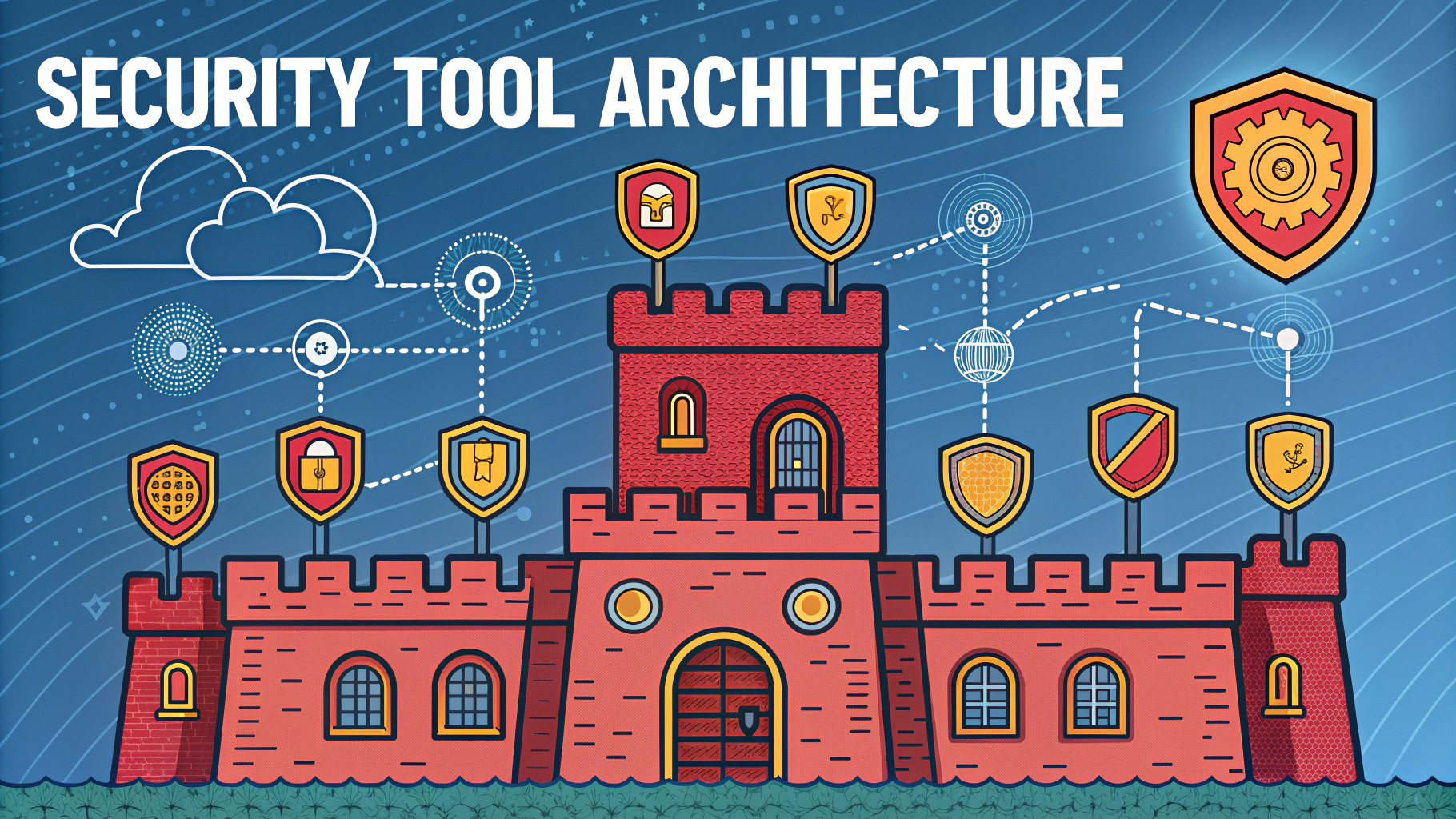
Security tool architecture forms the backbone of effective penetration testing, enabling security professionals to systematically probe systems for vulnerabilities. A well-structured security testing toolkit combines reconnaissance tools, vulnerability scanners, exploitation ... Read more
Build Server Security
build security
Security testing of build servers protects the foundation of software development and deployment processes from potential threats and vulnerabilities. Build servers handle sensitive data, access credentials, and control deployment pipelines, ... Read more
Secret Management

secrets management
Secret management stands as a cornerstone of cybersecurity, particularly during penetration testing operations where handling sensitive data requires meticulous care and precision. Penetration testers must safeguard various types of secrets ... Read more
Deployment Security
deployment security
Penetration testing during deployment phases helps organizations identify security vulnerabilities before applications go live. Security teams use automated and manual testing methods to simulate real-world attacks against newly deployed systems ... Read more