
Technical Interview Questions
Technical interviews for penetration testing positions require demonstrating both practical skills and theoretical knowledge of cybersecurity concepts
Technical Interview Questions

Technical interviews for penetration testing positions require demonstrating both practical skills and theoretical knowledge of cybersecurity concepts.
Successful candidates must show proficiency in identifying vulnerabilities, conducting security assessments, and implementing defensive measures across various systems and networks.
This guide covers essential technical interview questions for penetration testing roles, with practical examples and recommended approaches for answering them.
Common Technical Questions
- Explain the differences between black box, white box, and gray box penetration testing
- How would you perform reconnaissance on a target network?
- What tools would you use to identify web application vulnerabilities?
- Describe the process of privilege escalation in Windows environments
- How do you bypass Windows Defender during penetration tests?
Network Security Questions
- What is the difference between TCP and UDP?
- Explain how you would detect and exploit SQL injection vulnerabilities
- What steps would you take to identify and exploit cross-site scripting (XSS)?
- How do you perform man-in-the-middle attacks?
- Describe common wireless network vulnerabilities and exploitation methods
Tool Proficiency
Employers often test knowledge of specific penetration testing tools:
Tool Category
Examples
Use Cases
Vulnerability Scanners
Nessus, OpenVAS
Network vulnerability assessment
Network Analysis
Wireshark, tcpdump
Traffic analysis and packet inspection
Web Application Testing
Burp Suite, OWASP ZAP
Web application security assessment
Practical Scenarios
Be prepared to solve hands-on challenges like:
- Setting up a lab environment for testing exploits
- Writing simple exploit scripts using Python or Ruby
- Demonstrating knowledge of common CVEs and their exploitation
- Explaining post-exploitation techniques and persistence mechanisms
Professional Certifications
Having these certifications can strengthen your interview performance:
- OSCP – Offensive Security Certified Professional
- CEH – Certified Ethical Hacker
- GPEN – GIAC Penetration Tester
- eJPT – eLearnSecurity Junior Penetration Tester
Sample Questions and Answers
Q: How would you enumerate a Windows domain?
- Use tools like PowerView and BloodHound
- Enumerate users with net user /domain
- Map trust relationships between domains
- Identify potential privilege escalation paths
Q: What steps would you take to test a web application’s security?
- Map the application’s attack surface
- Test authentication mechanisms
- Check for common vulnerabilities (OWASP Top 10)
- Perform both automated and manual testing
Next Steps for Success
Prepare for interviews by:
- Setting up a home lab using VirtualBox or VMware
- Practicing on platforms like HackTheBox and TryHackMe
- Following security researchers on Twitter and GitHub
- Contributing to open-source security tools
- Documenting your findings and creating write-ups
Documentation and Reporting
Strong documentation skills are crucial for penetration testing roles:
- Writing clear and detailed technical reports
- Creating executive summaries for non-technical stakeholders
- Documenting methodologies and findings
- Providing actionable remediation steps
Communication Skills
Technical interviews often assess your ability to:
- Explain complex vulnerabilities to different audiences
- Present findings to management and technical teams
- Collaborate with development and security teams
- Provide clear remediation guidance
Legal and Ethical Considerations
Be prepared to discuss:
- Scope limitations and boundaries
- Rules of engagement
- Data handling and confidentiality
- Compliance requirements (GDPR, HIPAA, etc.)
Incident Response Integration
Key Areas to Address:
- Coordination with blue teams
- Proper escalation procedures
- Evidence handling and preservation
- Post-incident analysis and reporting
Advancing Your Penetration Testing Career
Success in penetration testing interviews requires:
- Continuous learning and skill development
- Building a strong professional network
- Maintaining updated knowledge of threats and vulnerabilities
- Developing specialized expertise in specific domains
- Creating a portfolio of documented testing experience
Remember to showcase both technical expertise and professional maturity during interviews, as employers value well-rounded security professionals who can operate effectively within organizational constraints while delivering high-quality security assessments.
FAQs
- What is the difference between active and passive reconnaissance in penetration testing?
Active reconnaissance involves direct interaction with the target system, such as port scanning or vulnerability scanning, while passive reconnaissance involves gathering information without direct interaction, such as using public records or OSINT tools. - How do you perform a basic network enumeration?
Network enumeration involves using tools like Nmap to scan for open ports, identify running services, operating systems, and potential vulnerabilities. Basic commands include nmap -sV for service detection and nmap -sC for default script scanning. - What tools do you use for web application penetration testing?
Essential tools include Burp Suite for proxy interception and testing, OWASP ZAP for automated scanning, SQLmap for SQL injection testing, and Nikto for web server scanning. - How do you approach password cracking during a pentest?
Password cracking typically involves using tools like Hashcat or John the Ripper, implementing dictionary attacks, rainbow table attacks, and brute force methods while considering the hash type and computational resources available. - What is privilege escalation and how do you test for it?
Privilege escalation is the process of exploiting system vulnerabilities to gain higher-level access. Testing involves checking for misconfigured permissions, vulnerable services running as root/SYSTEM, and unpatched software using tools like LinPEAS or WinPEAS. - How do you test for Cross-Site Scripting (XSS) vulnerabilities?
XSS testing involves injecting malicious scripts into web inputs, checking for proper input validation, and testing different contexts (reflected, stored, and DOM-based XSS) using custom payloads and automated tools. - What is the importance of post-exploitation in penetration testing?
Post-exploitation involves maintaining access, gathering additional information, lateral movement, and documenting findings. It’s crucial for understanding the full impact of vulnerabilities and potential attack paths. - How do you approach writing a penetration testing report?
A pentest report should include an executive summary, methodology, findings with severity ratings, technical details, proof of concept, and remediation recommendations, all presented in a clear, actionable format. - What is the OWASP Top 10 and why is it important in pentesting?
The OWASP Top 10 is a regularly updated list of the most critical web application security risks. It serves as a fundamental framework for web application security testing and vulnerability assessment. - How do you perform network segmentation testing?
Network segmentation testing involves checking trust relationships between network segments, testing firewall rules, analyzing routing tables, and attempting lateral movement between different network zones.

Author: Editor

June 25, 2025
Related Posts
Tool Documentation Standards
documentation standards
Documentation standards ensure consistency, clarity, and effectiveness when recording findings during penetration testing engagements. Proper documentation helps security teams track vulnerabilities, communicate issues to stakeholders, and maintain an audit trail ... Read more
Testing Tool Integration
tool integration
Testing tool integration is a critical aspect of cybersecurity assessment that combines various security testing tools to create a more robust and comprehensive penetration testing workflow. Security professionals need efficient ... Read more
Automation Framework Design

automation framework
An automation framework streamlines and standardizes penetration testing processes, making security assessments more efficient and repeatable. Properly designed frameworks reduce manual effort while maintaining testing quality and consistency across different ... Read more
Exploitation Tool Development
tool development
Penetration testing tools require careful development to effectively identify security vulnerabilities in systems and networks. Security professionals need specialized exploitation tools that can safely simulate real-world attacks without causing damage. ... Read more
Security Tool Architecture
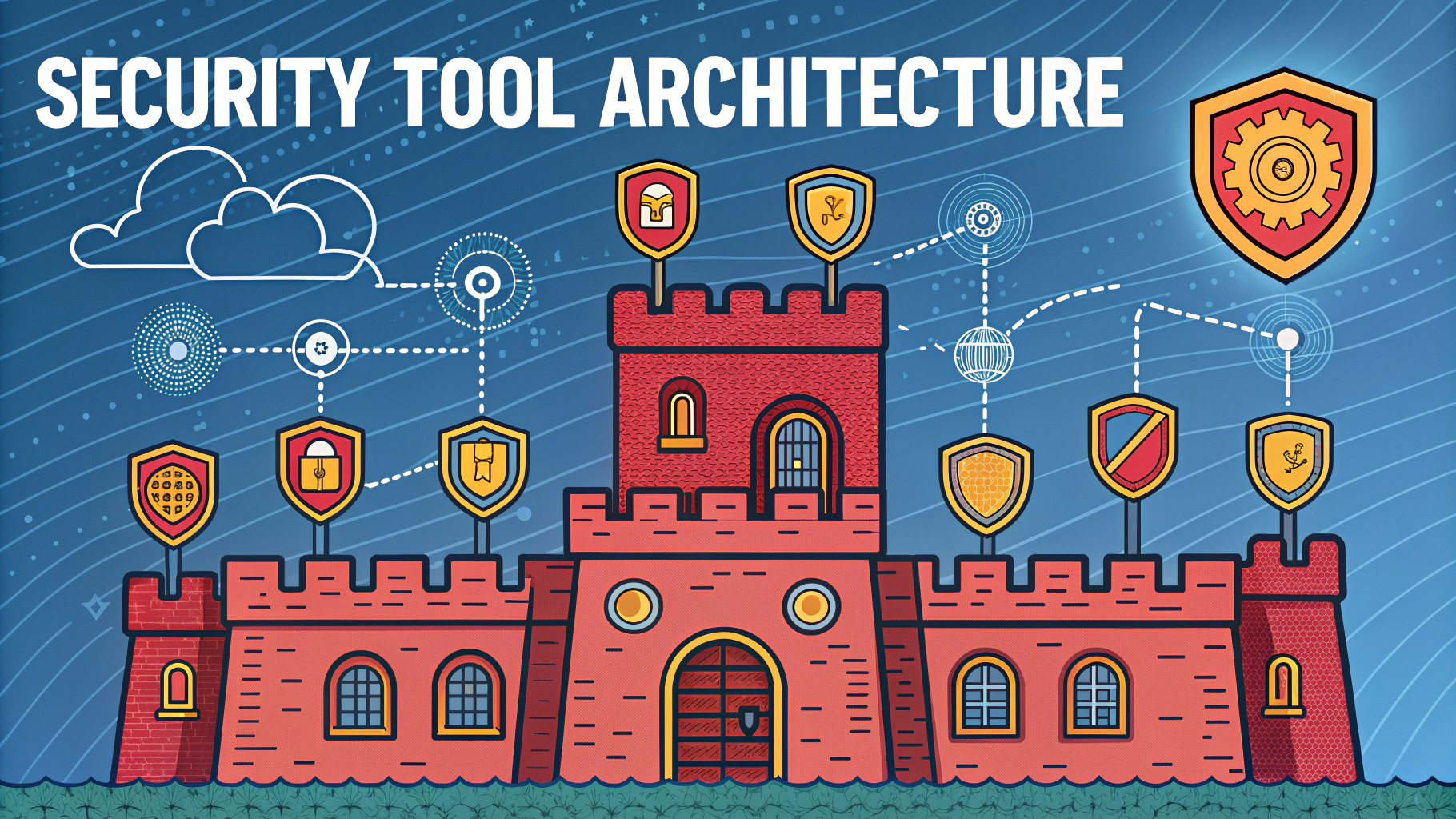
tool architecture
Security tool architecture forms the backbone of effective penetration testing, enabling security professionals to systematically probe systems for vulnerabilities. A well-structured security testing toolkit combines reconnaissance tools, vulnerability scanners, exploitation ... Read more
Build Server Security
build security
Security testing of build servers protects the foundation of software development and deployment processes from potential threats and vulnerabilities. Build servers handle sensitive data, access credentials, and control deployment pipelines, ... Read more
Secret Management

secrets management
Secret management stands as a cornerstone of cybersecurity, particularly during penetration testing operations where handling sensitive data requires meticulous care and precision. Penetration testers must safeguard various types of secrets ... Read more
Deployment Security
deployment security
Penetration testing during deployment phases helps organizations identify security vulnerabilities before applications go live. Security teams use automated and manual testing methods to simulate real-world attacks against newly deployed systems ... Read more